How Streaming Bundles Became the New Cable Package — And How to Escape the Same Trap Twice
Remember the pitch? You'd pay for exactly what you wanted, watch it whenever you felt like it, and never again have to subsidize 200 channels of content you'd never touch. Cord-cutting was freedom. It was control. It was the end of the bloated cable bundle.
So how did we end up here, staring at a Disney+/Hulu/ESPN+ bundle, a Paramount+/Showtime package, and an Apple One subscription that includes services we're pretty sure we've never opened? How did the thing we ran away from follow us home?
The Bundle Is Back, Baby
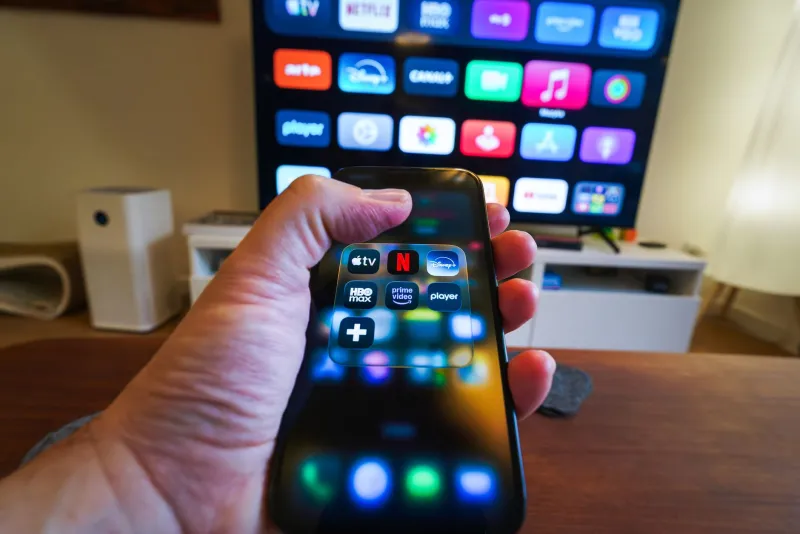
The streaming bundle is now one of the industry's primary growth strategies, and it's working — for the platforms. Disney's flagship bundle (Disney+, Hulu, and ESPN+) has become one of the most aggressively marketed products in streaming. Apple One bundles Apple TV+, Apple Music, Apple Arcade, iCloud storage, and depending on the tier, Apple News+ and Apple Fitness+. Amazon has been layering Prime Video channels on top of Prime memberships for years. Comcast's Xfinity customers can get Peacock included. Verizon has been bundling Netflix and Max into certain phone plans.
At every turn, the message is the same: you'll save money if you just take the whole package. And mathematically, sometimes that's even true — if you were already going to subscribe to every service in the bundle.
But that "if" is doing a lot of work.
The Math They Want You to Do vs. the Math You Should Actually Do
Let's take the Disney bundle as a concrete example. As of 2025, the bundle with ads runs around $14.99 per month. Disney+ alone with ads is roughly $7.99. Hulu with ads is $7.99 on its own. ESPN+ is around $10.99 standalone.
On paper, the bundle saves you real money versus subscribing to all three separately. But here's the question nobody at Disney wants you to ask: do you actually want all three?
If you're a household that uses Disney+ for the kids and has zero interest in live sports, ESPN+ is deadweight you're paying for every month. If you subscribed to Hulu specifically for its live TV option and aren't using the on-demand library much, you're paying for a lot of content that isn't serving you. The bundle looks like a deal only because it's being compared to the full price of three services you may not have chosen on their own.
This is the exact same logic the cable industry used for decades. Your basic cable package wasn't priced as a collection of channels you'd watch — it was priced as a bundle where the channels you actually wanted subsidized the ones that needed to exist to justify the package.
We've been here before. We just forgot what the exit ramp looked like.
Who the Bundle Actually Helps
To be fair, bundles aren't universally bad. If you're a sports fan who wants live coverage, a Disney+ subscriber who also watches Hulu originals, and someone who'd pay for ESPN+ anyway, the Disney bundle is a genuine deal. If you're an Apple household with multiple devices and you're already paying for iCloud storage and Apple Music separately, Apple One probably makes financial sense.
The bundle trap isn't about bundles existing — it's about how they're marketed and how easy it is to end up paying for them without a clear-eyed accounting of what you're actually using.
Streaming platforms know this. They have access to your viewing data, and they can see that a significant percentage of bundle subscribers are barely touching one or more of the included services. That's not a bug — it's a feature. The underused service in your bundle is pure margin.
The Creator Economy Angle Nobody's Talking About
Here's something that doesn't get enough attention in the bundle conversation: the rise of streaming bundles is reshaping what kinds of content get made and which creators get supported.
When platforms are competing for individual subscribers on the strength of their content libraries, they have a strong incentive to invest in distinctive, high-quality original programming. That environment created a golden age of streaming originals — the era that gave us prestige TV on streaming and genuinely innovative creator-driven content.
But when platforms lock in subscribers through bundles, the competitive pressure to have the absolute best content relaxes. You're already paying for the bundle. You're probably not going to cancel the whole thing because one service in the package had a weak quarter. The churn risk is distributed across the bundle, which means each individual service has less at stake.
For independent creators, smaller production companies, and the kind of niche content that built loyal streaming audiences, this shift is concerning. The platforms most likely to take creative risks are the ones most dependent on content quality to retain subscribers. Bundle-locked subscribers are a different equation.
Practical Strategies for Opting Out
So what do you actually do if you want to avoid the bundle trap without losing access to what you genuinely watch?
Audit before you commit. Before signing up for any bundle, spend 20 minutes honestly cataloging which services in the package you've used in the last 30 days. Not which ones you might use someday — which ones you actually opened. If one of the bundled services has been dormant, its inclusion in your "deal" is a subsidy you're paying for.
Rotate, don't stack. The rotation strategy — subscribing to one service at a time, binging what you want, then canceling and moving on — is still one of the most effective tools for cord-cutters. Bundles are specifically designed to make rotation harder by locking multiple services into a single billing relationship. Recognize that friction for what it is.
Watch for promotional pricing traps. Bundles are often introduced at a promotional rate that makes them look like obvious deals. The promotional rate expires. The full rate is what you'll be paying most of the time you're subscribed. Do the math on the full rate, not the intro offer.
Use free tiers strategically. Several streaming services have free, ad-supported tiers — Peacock, Tubi, Pluto TV, and others offer substantial libraries without a monthly charge. If one of the services in a bundle you're considering has a free tier that covers most of what you'd actually watch on it, factor that into your calculation.
Don't let inertia do the platforms' work for them. The hardest part of escaping a bundle isn't the cancellation — it's remembering to cancel. Set a calendar reminder 30 days after any new subscription starts to evaluate whether you're actually using what you're paying for.
We've Seen This Movie Before
The cable industry didn't become a bloated, overpriced monopoly overnight. It happened gradually, through the slow accumulation of bundle logic applied again and again until the average American was paying $80, $90, $100 a month for a package they'd never designed and couldn't meaningfully opt out of.
Streaming started as the alternative. It's becoming the thing it replaced. The tools to push back exist — but they require the same intentional, skeptical approach to your subscriptions that made cord-cutting a smart financial move in the first place.
Cut the cord. Keep the content. Just make sure you actually want the content before you agree to the package.